How to Style a Warm and Collected Tabletop with Trays, Bowls, and Artisan Accents
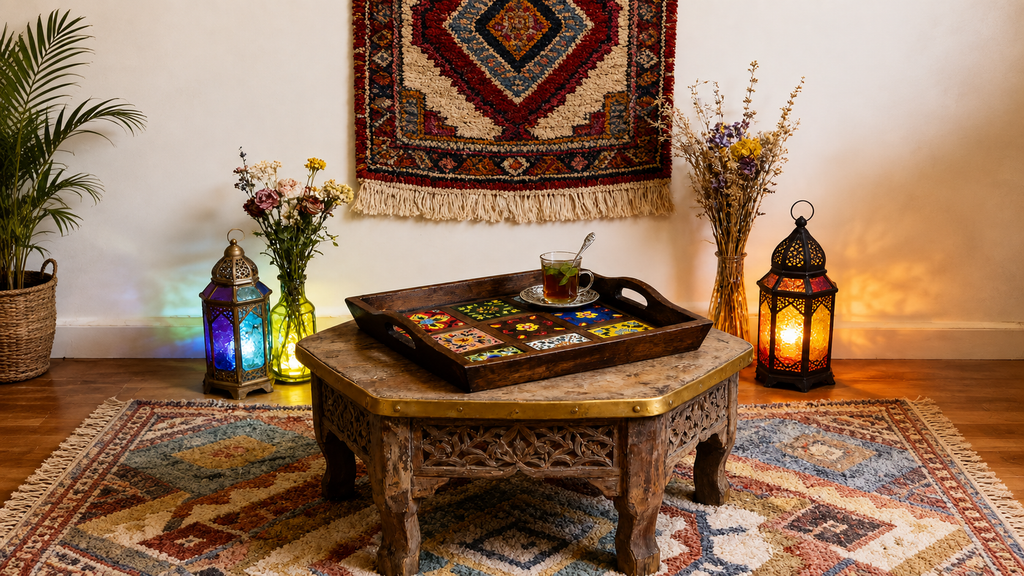

How to Style a Warm and Collected Tabletop with Trays, Bowls, and Artisan Accents
A beautiful tabletop is not simply a collection of decorative objects. It is a composition of scale, texture, material, negative space, and pieces that feel useful enough to belong there every day.
Why some tabletops feel styled and others simply feel full
A tabletop can become the visual center of a room without containing very many objects. In fact, some of the most successful arrangements rely on restraint: one tray, one bowl, a candle, perhaps a book or small vase, and enough empty surface for each piece to be noticed.
The difference between a collected arrangement and simple clutter usually comes down to organization. Objects need a relationship to one another through scale, material, height, tone, or function.
At Maple Vale Goods, trays, bowls, painted storage pieces, metal accents, and decorative vessels are especially useful because they help create this structure while also contributing texture and character.
Use one larger piece to give the arrangement a clear center
A tray or substantial bowl is one of the easiest ways to establish structure. It creates a visual boundary and tells the eye where the arrangement begins and ends.
On a coffee table, a wooden tray can group candles, books, matches, a small vase, or everyday items that might otherwise appear scattered. On a dining table, a large bowl can act as a quiet centerpiece without requiring flowers or seasonal decoration.
The anchor does not need to be the most ornate object. Often the strongest base is something simple in form but rich in material—solid wood, painted metal, or a piece with a softly aged finish.

A tabletop feels more natural when objects do not all sit at the same level
Height variation creates movement. A low tray or bowl establishes a base, a medium-height decorative box creates structure, and a taller candleholder, vase, or branch adds vertical interest.
When every object is approximately the same height, the arrangement can look flat and overly deliberate. Even a small difference in scale helps the composition feel more relaxed.
It is useful to think of the tabletop almost like a small landscape: low areas, middle areas, one or two higher points, and open space between them.
A Simple Three-Layer Formula
Low Base
Start with a tray, shallow bowl, book stack, or textile element to create a defined foundation.
Mid-Level Object
Add a decorative box, candle, ceramic vessel, or medium bowl to create visual weight.
Vertical Accent
Finish with a taller object such as a branch, candlestick, vase, or sculptural accessory.
Warmth comes from contrast, not from using the same finish everywhere
A tabletop becomes more interesting when the materials respond to one another rather than match exactly. Natural wood softens glass. Brass warms ceramic. Painted surfaces add color beside plain stone or linen. Iron brings structure next to softer materials.
This is especially helpful when the room itself is very neutral. You may not need stronger wall color or patterned furniture if the tabletop already introduces enough depth through material.
Wood, painted metal, ceramic, glass, books, linen, and brass-tone objects can all live together successfully when one or two qualities are repeated—perhaps warm undertones, aged finishes, or a shared sense of handcrafted texture.
A collected tabletop should look as though each piece arrived for a different reason, yet somehow belongs in the same conversation.
Maple Vale Goods · Styling Notes
Let everyday use become part of the styling
A tray that holds tea, a bowl for fruit, a decorative box for keys, or a metal dish for small accessories does not need to be removed when the room is “styled.”
Useful objects often make a tabletop feel more believable because they reflect how the room is actually lived in.
The goal is not to eliminate function. It is to make function look intentional.
Empty surface is part of the composition
One of the fastest ways to make a tabletop look more refined is to remove something. Negative space allows the eye to rest and makes the remaining objects appear more important.
This is particularly useful with decorative pieces that already have strong pattern, color, hand-painted detail, or aged surfaces. A highly decorative tray may not need five additional accents. A carved wooden bowl can be effective on its own.
Leaving part of a coffee table, console, or dining table completely clear also helps preserve its practical purpose. Beautiful styling should not make the surface difficult to use.
Styling Ideas for Different Surfaces
Use a medium tray, one decorative box, a candle, and a low natural element such as a bowl or small floral arrangement.
Keep the center simple. A generous wooden bowl or sculptural serving piece often has more impact than several small accents.
Combine a tray for keys, a decorative box, and one taller object such as a lamp, mirror, or branch.
Use a painted storage box, perfume, a small dish, and a mirror. Keep the palette controlled so the decorative box remains the focal point.
A natural wooden bowl with fruit or dry goods can soften hard surfaces and keep the arrangement practical.
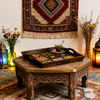
Layer a rectangular tray with ceramic tea ware, a small bowl, linen, and one atmospheric object such as an incense holder.
Objects do not need to match if their tones relate
A warm tabletop can include several different colors without feeling chaotic. The trick is to think in families rather than exact matches.
Natural brown wood, antique brass, muted green, deep red, aged cream, rust, and blackened metal can all work together because they share earthy undertones. Likewise, a more restrained palette of pale wood, off-white ceramic, soft gray, and clear glass can feel cohesive through lightness rather than color repetition.
When using a vividly painted object, allow it to become the concentrated color moment and keep most surrounding pieces quieter.
Change small elements instead of rebuilding the whole arrangement
A well-composed tabletop can adapt easily throughout the year. The tray, bowl, or decorative box can remain in place while smaller elements change.
In spring, add fresh greenery or a pale ceramic piece. In summer, use fruit, linen, or clear glass. Autumn works naturally with wood, brass, dried branches, deeper color, and textured ceramics. Winter can introduce candles, dark metal, evergreen clippings, or warmer textiles.
This approach is more practical than replacing the entire arrangement seasonally and helps your favorite objects remain part of the room year-round.
Before You Finish Styling, Check These Seven Things
Is there one clear anchor piece, such as a tray, bowl, or decorative box?
Are the objects different enough in height to create movement?
Have you mixed at least two or three different materials rather than repeating one finish?
Is there enough empty surface for the arrangement to breathe?
Does at least one item serve a practical everyday purpose?
Do the colors relate through undertone even if they do not match exactly?
Could you remove one item and make the composition stronger? If yes, try it.
Beautiful tabletops should still be easy to live with
When trays, bowls, and decorative storage pieces remain in daily use, they need practical care. Dust wooden and hand-painted objects with a soft cloth and avoid prolonged standing water unless the individual product is specifically suitable for it.
Metal accents may develop subtle patina over time, particularly on vintage-inspired finishes. Painted surfaces should be cleaned gently to avoid unnecessary wear.
If a piece is used for serving food, incense, candles, or other special applications, always follow the individual product information regarding suitable use and care.
The best tabletop arrangements leave room for real life.
A beautiful surface should not feel untouchable. It should still have space for a cup of tea, a book, keys at the end of the day, or whatever else the room is actually used for.
Trays, bowls, decorative boxes, and artisan accents are especially useful because they bridge the gap between styling and daily function. They create order while still adding texture, material, and personality.
At Maple Vale Goods, that balance is what we look for most: objects that make a room feel more considered without making it feel less lived in.