Why Handcrafted Wooden Bowls and Trays Bring More Character to Everyday Interiors
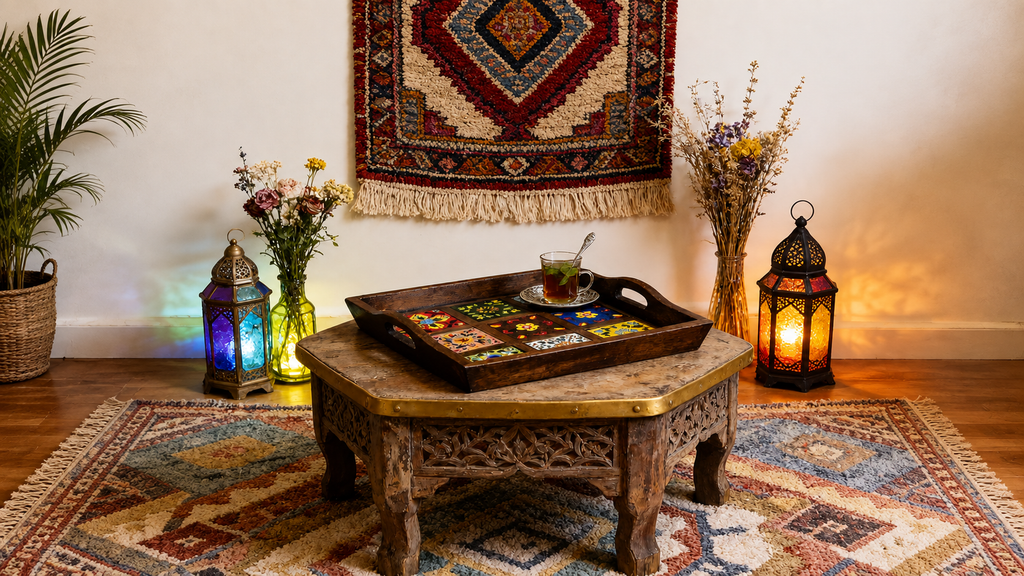

Why Handcrafted Wooden Bowls and Trays Bring More Character to Everyday Interiors
Natural grain, carved surfaces, generous forms, and the quiet presence of real wood can turn even the simplest everyday object into something worth noticing.
There is a reason wooden bowls and trays continue to appear in homes across very different decorating styles. They are practical, easy to live with, and visually warm, but their appeal goes beyond function. A piece of wood carries grain, texture, tonal variation, and small marks that give it a presence manufactured surfaces often struggle to reproduce.
At Maple Vale Goods, we are especially drawn to wooden pieces that retain this sense of material character. Hand-carved bowls, painted serving trays, brass-accented snack trays, and large tea trays can all be useful in everyday life while also adding depth to an interior.
The most interesting wooden pieces do not disappear into a room. They quietly connect different elements—ceramic, metal, linen, glass, stone, books, flowers, and collected objects—while helping the space feel more grounded.
The beauty of wood begins with variation
No two areas of natural wood are exactly alike. Grain can move in long quiet lines, tighten into darker swirls, shift in color, or reveal knots and marks created as the material developed. These differences make wood visually active without feeling overly decorative.
When a bowl or tray is carved or finished by hand, this variation becomes even more visible. The shape may feel slightly softer, the edge less mechanical, or the surface more tactile. Rather than making the piece look unfinished, these qualities can give it individuality.
This is particularly valuable in modern interiors, where many surfaces are intentionally smooth and uniform. A wooden bowl placed on a stone counter or a carved tray sitting on a clean console can introduce enough irregularity to make the whole arrangement feel more natural.
Natural variation is not something to hide—it is often the detail that makes a wooden object feel alive in the room.
Maple Vale Goods · Design Notes
A tray can organize a surface without making it feel overly arranged.
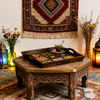
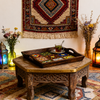
One of the most useful qualities of a tray is its ability to create visual boundaries. A coffee table may hold a candle, a small vase, a book, and a few personal objects. Without a tray, those pieces can appear scattered. Once grouped together, the same objects begin to read as a deliberate arrangement.
Wood is especially effective for this because it does not feel cold or overly formal. A natural or vintage-finished tray can soften the look of glass, metal, polished stone, or painted furniture.
Large rectangular wooden trays also move easily between uses. They can carry tea, coffee, breakfast, towels, beauty products, tableware, or decorative objects, making them practical additions to living rooms, bedrooms, kitchens, studios, salons, and guest spaces.
Handcrafted pieces work especially well in layered interiors
Rooms with personality are rarely built from one matching collection. They usually develop through combinations of old and new, refined and rustic, smooth and textured, neutral and decorative.
A hand-carved wooden bowl is useful because it can move easily between these different visual languages. In a minimalist room, it introduces warmth. In a vintage interior, it reinforces the collected feeling. In a bohemian or globally inspired space, it naturally connects with woven textiles, painted objects, ceramics, brass, and handmade accessories.
Even heavily decorated wooden pieces can feel balanced when the surrounding materials are quieter. A painted or brass-accented tray can become the point of interest on an otherwise simple coffee table, console, or sideboard.
For Coffee Tables
Use a wooden tray to gather candles, books, remotes, matches, flowers, or small decorative objects into one composed area while keeping the table practical.
For Dining Spaces
A wooden bowl can hold fruit, wrapped snacks, or decorative objects and adds a softer natural element beside ceramic plates, glassware, and metal cutlery.
For Entryways
Smaller bowls and trays can act as catchalls for keys, coins, sunglasses, and daily essentials while making an entrance feel more intentionally styled.

Styling wooden pieces without making the room feel rustic
Wooden objects are often associated with rustic decorating, but they can work just as successfully in contemporary, elegant, eclectic, or restrained interiors. The key is contrast.
A heavily grained wooden bowl looks cleaner when surrounded by pale stone or simple plaster walls. A distressed painted tray becomes more sophisticated beside clear glass, linen, or polished metal. A traditional wooden serving piece can feel unexpectedly modern when used on a simple dining table with minimal tableware.
Use one character-rich wooden object against clean surfaces rather than filling the room with matching rustic pieces.
Layer wood with brass, framed artwork, books, aged ceramics, and warm textiles for a collected, lived-in feel.
Combine carved and painted wood with woven baskets, patterned fabrics, natural fibers, and global decorative objects.
Choose natural wood tones to bring warmth into cream, ivory, taupe, stone, and soft gray palettes without adding strong color.
Decorative finishes can make familiar forms feel completely different
A simple bowl or tray can take on a very different personality depending on how the surface is treated. Natural carved wood feels grounded and organic. Painted wood introduces color and pattern. Distressed finishes suggest age and history. Brass or brass-tone detailing creates contrast and can make the object feel more ornate.
This is why familiar functional forms are so useful in interior styling. The basic shape remains approachable, while the surface allows the piece to move from minimal to decorative, rustic to refined, or quiet to statement-making.
For retailers and homeowners alike, this also makes wooden serveware and storage pieces easy to combine. Pieces do not have to match perfectly to feel related; repeating natural materials and warm tones is often enough to create continuity.
Choosing the right size and use
Scale matters almost as much as style. A bowl that is too small can disappear on a large dining table, while an oversized tray may overwhelm a narrow console. Before choosing a piece, consider both the dimensions of the object and the amount of negative space around it.
Large trays are especially useful when you want to create a strong visual anchor. Smaller bowls are better suited to bedside tables, entryways, shelves, and grouped arrangements. Medium serving bowls often work well as fruit bowls, snack holders, or decorative centerpieces.
Always review the individual product measurements and intended use. Some decorative or hand-painted pieces are better suited to dry snacks, wrapped foods, or decorative display than direct contact with wet or highly acidic foods.
Caring for Natural and Decoratively Finished Wood
Wood responds to its environment, which means a little thoughtful care can help preserve both its structure and its finish. For most decorative wooden pieces, routine dusting with a soft dry cloth is sufficient. When necessary, use a slightly damp cloth and dry the surface promptly.
Avoid prolonged soaking, standing water, dishwasher cleaning, abrasive sponges, harsh chemicals, and extreme heat unless a specific product is expressly designed for those conditions.
Hand-painted, distressed, or metal-accented pieces may require even gentler care. Scrubbing can alter decorative finishes, while moisture can affect both wood and metal details over time.
Natural wood may gradually deepen in color or develop subtle changes with age and use. For many people, this evolving surface is part of what makes the material increasingly beautiful.
Why these pieces often become long-term favorites
Useful objects tend to stay in our homes longer than purely decorative ones. A well-chosen bowl may move from a kitchen counter to a dining table, then later become a shelf display or an entryway catchall. A wooden tray can serve breakfast one day and hold candles and books the next.
That flexibility allows the object to adapt as rooms and routines change. Instead of belonging to one specific decorating moment, it can continue to find a place in the home.
This is one of the qualities we value most at Maple Vale Goods: pieces that are visually distinctive enough to matter, but practical and versatile enough to remain part of everyday life.
Objects do not need to be elaborate to make a room feel more personal.
Sometimes the most effective addition is simply a material that feels real—a carved edge, visible grain, a painted surface, or the warm weight of wood on a table.
Handcrafted wooden bowls and trays work because they bring together function and character. They organize, serve, hold, display, and quietly contribute to the atmosphere around them.